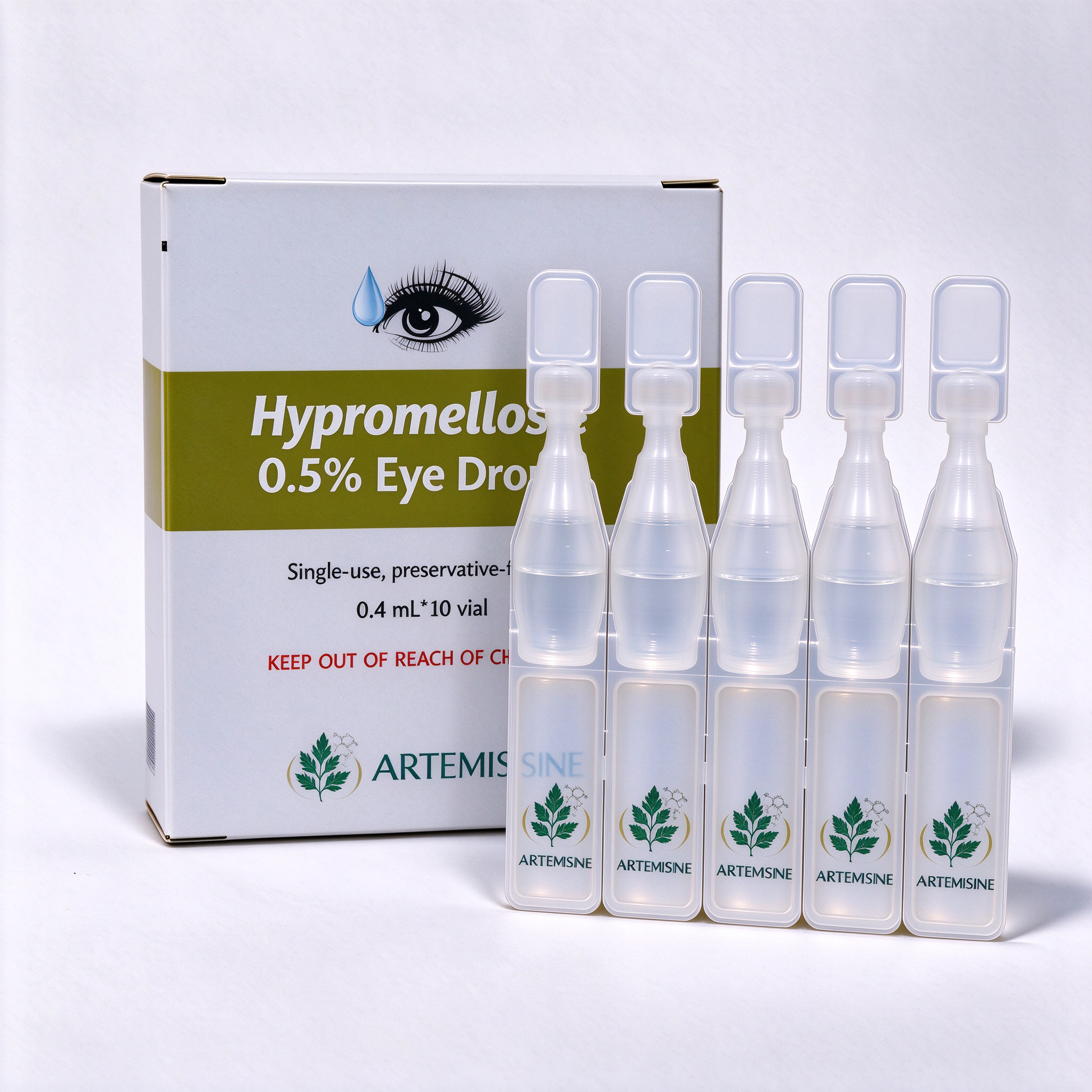
Hypromellose Eye Drops 0.5% (5 mg/mL) 0.4 mL

● Hypromellose 0.5% (5 mg/mL) is a sterile ophthalmic solution used as an artificial tear and ocular lubricant [1][2] ● Hypromellose is a s

Hypromellose Eye Drops 0.5% (5 mg/mL) 0.4 mL product packaging
Ophthalmic

Hypromellose Eye Drops 0.5% (5 mg/mL) 0.4 mL

● Hypromellose 0.5% (5 mg/mL) is a sterile ophthalmic solution used as an artificial tear and ocular lubricant [1][2]
● Hypromellose is a semisynthetic cellulose derivative (hypromellose 2910 in the US reference); it is an inert compound with no pharmacological activity, providing tear-like lubrication of the ocular surface [1][2][3]
● The solution is clear to slightly opalescent, colourless and slightly viscous, lubricating the eye in the same way as natural tears [2][3]
● One mL contains 5 mg of hypromellose; a 0.4 mL single-dose unit contains about 2 mg [1][2]
● US reference (OTC): inactive ingredients benzalkonium chloride 0.01% as preservative, dibasic and monobasic sodium phosphate, purified water, sodium chloride and sodium citrate; 15 mL dropper bottle [1]
● UK reference (0.5% SmPC): excipients sodium citrate dihydrate, anhydrous disodium hydrogen phosphate, sodium dihydrogen phosphate monohydrate, sodium chloride, benzalkonium chloride and purified water; 10 mL bottle [2]

Product NameHypromellose Eye Drops 0.5% (5 mg/mL) 0.4 mL
Dosage FormOphthalmic
Strength0.5% (5 mg/mL) 0.4 mL
StandardsBP / ENTERPRISE
PackingCustomized per market requirement (bottle / blister / box)
DocumentsCOA, COPP, DMF, CTD Dossiers
MOQContact us for MOQ and current stock
Request Quotation › ← Back to Ophthalmic
WHO Prescribing Guidance

Indications · Administration · Dosage · Precautions

Reference information summarised from WHO prescribing guidance. Expand each item below — clinical use must always follow the locally approved product insert.

🎯Indications▾
● US reference (OTC): for the temporary relief of burning and irritation due to dryness of the eye, and for use as a protectant against further irritation [1] ● UK reference: provides tear-like lubrication for the symptomatic relief of dry eyes and eye irritation associated with deficient tear production (usually in keratoconjunctivitis sicca and xerophthalmia); also used as an ocular lubricant for artificial eyes [2] ● It is also used to moisten hard contact lenses and to lubricate artificial eyes [3]
💧Administration▾
● For external ocular use only; instil 1–2 drops into the affected eye(s) as needed [1][2] ● Wash hands before use; do not touch the dropper tip to the eye or any other surface, and replace the cap immediately after each use [1][2][3] ● Tilt the head back, pull the lower eyelid gently downwards, hold the bottle upside down and squeeze gently to release a drop; keep the eye closed and press the inner corner of the eye for about 1 minute [3] ● Soft contact lenses: remove them before using the drops and wait at least 15 minutes before reinsertion (benzalkonium chloride may be absorbed by and discolour soft lenses) [2][3]; the US label also directs removal of contact lenses before use [1] ● If used together with another eye drop, wait 5–15 minutes between the two applications [3] ● Storage: UK reference — do not store above 25 °C, do not refrigerate, keep tightly closed and discard 1 month after opening (unopened shelf life 36 months) [2]; BP leaflet — do not store above 25 °C, protect from light, discard 28 days after opening [3]; US reference — store at room temperature [1]
⚖️Dosage▾
The schedules below refer to registered hypromellose ophthalmic products; for the single-dose presentation, instil the volume and frequency prescribed in the approved label of the product concerned [1][2][3]
⚠️Precautions & Warnings▾
● Contraindicated in patients hypersensitive to hypromellose or to any component of the product [1][2][3] ● For external use only; do not use if the solution changes colour or becomes cloudy [1] ● Stop use and consult a doctor if irritation persists or worsens, or if headache, eye pain, vision changes or continued redness occur [1][2][3]; the US label directs stopping and asking a doctor if the condition worsens or persists for more than 72 hours [1] ● Soft contact lenses: do not use while lenses are worn; remove lenses before instillation and wait at least 15 minutes before putting them back [2][3] ● Benzalkonium chloride may cause eye irritation, especially in patients with dry eyes or corneal disorders; talk to a doctor if abnormal eye sensation, stinging or pain occurs after use [3] ● Pregnancy and breast-feeding: systemic exposure after topical ocular use is negligible and the compound is pharmacologically inert; no effects on the breastfed infant are anticipated, but advice should be sought [2][3] ● Driving and using machines: transient blurring of vision may occur on instillation; do not drive or operate machinery unless vision is clear [2][3] ● Adverse reactions: vision blurred, eye pain, foreign body sensation in the eye, eye irritation and ocular hyperaemia have been reported; these effects usually wear off after a short time [2][3] ● Very rarely, corneal calcification has been reported in association with phosphate-containing eye drops in patients with significantly damaged corneas [2] ● Overdose: no toxic effects are expected with ocular overdose or accidental ingestion of one bottle [2]; an excess can be washed out of the eye with warm water [3] ● The product is available as an OTC medicine in the US [1] and as a pharmacy (P) medicine in the UK [2] For full prescribing information, refer to the approved product label of the product concerned [1][2][3].

Reference: WHO Model Formulary / WHO Model List of Essential Medicines. For professional reference only — clinical use must follow the locally approved product insert and national treatment guidelines.

Why Order From Us

Factory Direct. Fully Documented.

🛡️

GMP Quality

Full batch testing and quality traceability under standard GMP workshops.

🚢

Fast Delivery

Sufficient stock on regular items, familiar with export logistics to 50+ countries.

📑

Registration Support

COA, DMF, dossier and legalization documents for your market registration.

FAQ

Hypromellose Eye Drops 0.5% (5 mg/mL) 0.4 mL — Frequently Asked Questions

Which documents are provided for Hypromellose Eye Drops 0.5% (5 mg/mL) 0.4 mL registration?

Every batch of Hypromellose Eye Drops 0.5% (5 mg/mL) 0.4 mL ships with a Certificate of Analysis (COA). For market registration we provide COPP, DMF and CTD-format dossiers, plus legalisation support where your authority requires it.

What is the MOQ and lead time for Hypromellose Eye Drops 0.5% (5 mg/mL) 0.4 mL?

MOQ and lead time for Hypromellose Eye Drops 0.5% (5 mg/mL) 0.4 mL depend on strength, packaging and destination market. Send us your target market and annual volume — our export team confirms current stock, MOQ and lead time within 24 hours.

Do you support OEM / private label?

Yes. We offer OEM packaging and private-label production for Hypromellose Eye Drops 0.5% (5 mg/mL) 0.4 mL, subject to the regulatory requirements of the destination market.

Which markets have you exported ophthalmic products to?

We have supplied ophthalmic products to 50+ countries across Africa, Southeast Asia, Latin America and the Middle East, with experience in ministry-of-health registration and international tenders.

How is the quality of Hypromellose Eye Drops 0.5% (5 mg/mL) 0.4 mL controlled?

Hypromellose Eye Drops 0.5% (5 mg/mL) 0.4 mL is produced in China-GMP workshops (site re-inspected and passed in 2026), released only after full QC testing against BP / enterprise standards, with retained samples kept for one year beyond the product's expiry date.

Ask About This Product ›
✎ 💬 ↑
👋 Hi! I'm Care, your product guide. Tap me to ask about our medicines & APIs. ×
Care - product guide assistant