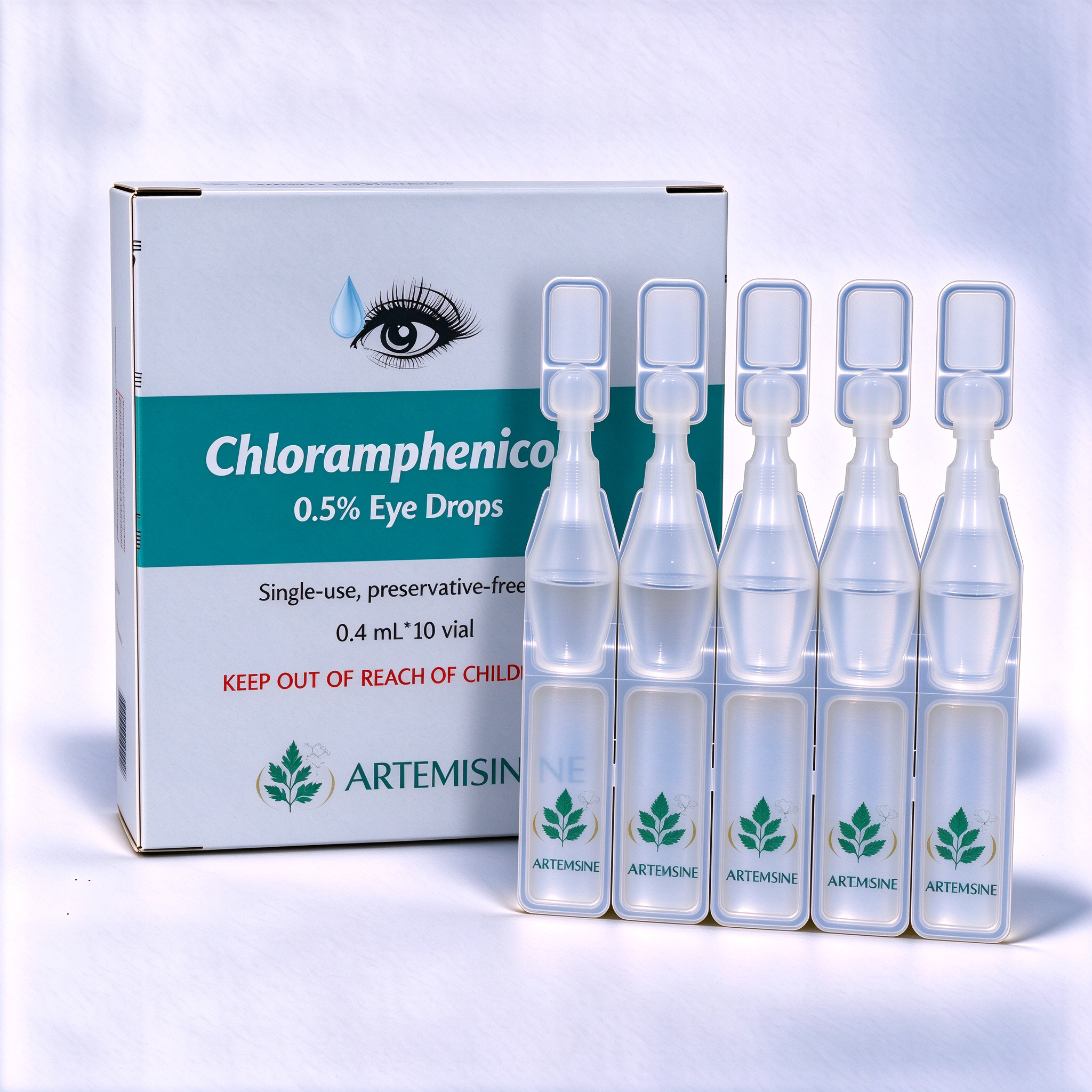
Chloramphenicol Eye Drops 0.5% (5 mg/mL) 0.4 mL

● Chloramphenicol is a broad-spectrum antibiotic with bacteriostatic activity against many Gram-positive and Gram-negative bacteria; it is n

Chloramphenicol Eye Drops 0.5% (5 mg/mL) 0.4 mL product packaging
Ophthalmic

Chloramphenicol Eye Drops 0.5% (5 mg/mL) 0.4 mL

● Chloramphenicol is a broad-spectrum antibiotic with bacteriostatic activity against many Gram-positive and Gram-negative bacteria; it is not effective against fungi, protozoa or viruses [1]
● It acts by binding to bacterial ribosomes and inhibiting protein synthesis at an early stage [1]
● Mainly bacteriostatic, but bactericidal against some Gram-positive cocci, Haemophilus influenzae and Neisseria; the spectrum also includes rickettsiae and chlamydia [2]
● Recognised conjunctival pathogens that may be susceptible: Staphylococcus aureus, Streptococcus pyogenes, Streptococcus pneumoniae, other beta-haemolytic streptococci, Haemophilus influenzae, Moraxella catarrhalis and Neisseria gonorrhoeae; acquired resistance has been described in all of these species, and chloramphenicol is not generally active against enterobacteriaceae or non-fermenters such as Pseudomonas aeruginosa [1]
● Clear, colourless to slightly yellow sterile eye drops, chloramphenicol 0.5% w/v (5 mg/mL), in 0.4 mL single-dose units [1][2]

Product NameChloramphenicol Eye Drops 0.5% (5 mg/mL) 0.4 mL
Dosage FormOphthalmic
Strength0.5% (5 mg/mL) 0.4 mL
StandardsBP / ENTERPRISE
PackingCustomized per market requirement (bottle / blister / box)
DocumentsCOA, COPP, DMF, CTD Dossiers
MOQContact us for MOQ and current stock
Request Quotation › ← Back to Ophthalmic
WHO Prescribing Guidance

Indications · Administration · Dosage · Precautions

Reference information summarised from WHO prescribing guidance. Expand each item below — clinical use must always follow the locally approved product insert.

🎯Indications▾
● Treatment of acute bacterial conjunctivitis in adults and children aged 2 years and over (OTC reference) [1] ● As a topical antibacterial for superficial ocular infections in adults and children (single-dose reference) [2]
💧Administration▾
● For ocular use only; instil into the conjunctival sac of the affected eye [1][2] ● Wash hands before and after use; do not touch the dropper with your fingers, ensure the nozzle does not touch the eye or skin, and replace the cap immediately after use [3] ● Single-dose units are for single use; discard after each application [2] ● Do not wear contact lenses during treatment; soft lens wearers should wait 24 hours after the last dose before reinserting their lenses [1][2][3] ● Systemic absorption may be reduced by compressing the lacrimal sac at the medial canthus for about a minute during and after instillation — especially advisable in children [2][3]
⚖️Dosage▾
The table below refers to registered chloramphenicol 0.5% eye-drop products; for the single-dose presentation, instil per the approved label [1][2]. ● Use the drops for 5 days even if the eye seems better; do not use for longer than 5 days unless told to do so [3] ● Speak to a pharmacist or doctor if there is no improvement after 2 days of use, or if symptoms get worse at any time [3]
⚠️Precautions & Warnings▾
● Contraindicated in hypersensitivity to chloramphenicol or any component, in myelosuppression during previous exposure, and in a family or personal history of blood dyscrasias including aplastic anaemia [1] ● Chloramphenicol is absorbed systemically from the eye and systemic toxicity has been reported [1] ● Aplastic anaemia has, rarely, followed topical use of chloramphenicol eye drops — bear this uncommon hazard in mind when assessing the benefits; pale skin, weakness, increased heart rate, shortness of breath, headache, pain, fever, infection or bruises may be signs of a severe blood disorder [1][2] ● In severe bacterial conjunctivitis, or where the infection is not confined to the conjunctivae, topical use should be supplemented by appropriate systemic treatment and the patient referred for medical advice [1][2] ● Prolonged or frequent intermittent use should be avoided as it may increase sensitisation and the emergence of resistant organisms; do not use for more than 5 days without consulting a doctor (OTC reference); maximum 10–14 days (single-dose reference) [1][2][3] ● Overgrowth of non-susceptible organisms, including fungi, may occasionally occur; refer to a doctor if any new infection appears during treatment [1] ● Seek immediate medical advice if symptoms worsen at any time, and consult a doctor if the eye infection does not start to improve within 48 hours [1] ● Referral criteria include disturbed vision, severe pain within the eye, photophobia, eye inflammation with a rash on the scalp or face, glaucoma, a cloudy eye, an unusual pupil or a suspected foreign body; also refer patients with recent conjunctivitis, glaucoma, dry eye syndrome, eye surgery or laser treatment within the last 6 months, eye injury, current use of other eye drops or ointment, or contact lens use [1] ● Concomitant use with other drugs liable to depress bone marrow function should be avoided [1] ● Pregnancy: safety has not been established and the OTC product is not recommended during pregnancy; breast-feeding: avoid use as chloramphenicol may appear in breast milk [1]; the single-dose reference: use in pregnancy and lactation only when considered essential by the physician [2] ● Driving: transient blurring of vision may occur; do not drive or operate hazardous machinery unless vision is clear [1][2] ● Adverse reactions: local — transient irritation, burning, stinging, itching and dermatitis; hypersensitivity — angioedema, anaphylaxis, urticaria, fever, vesicular and maculopapular dermatitis (discontinue immediately); blood — bone marrow depression, including idiosyncratic irreversible fatal aplastic anaemia, reported with topical use [1][2] ● Storage: multi-dose reference — store upright at 2–8 °C, do not freeze, protect from light, discard after the 5-day course (unopened shelf life 24 months; 28 days once opened) [1]; single-dose reference — store at 2–8 °C, do not freeze, protect from light, may be kept at up to 25 °C for 1 month [2]; NHS — store the eye drops in a fridge and use within 4 weeks of opening [3] ● Keep all medicines out of the sight and reach of children [1] For full prescribing information, refer to the approved product label / Summary of Product Characteristics of the product concerned [1][2][3].

Reference: WHO Model Formulary / WHO Model List of Essential Medicines. For professional reference only — clinical use must follow the locally approved product insert and national treatment guidelines.

Why Order From Us

Factory Direct. Fully Documented.

🛡️

GMP Quality

Full batch testing and quality traceability under standard GMP workshops.

🚢

Fast Delivery

Sufficient stock on regular items, familiar with export logistics to 50+ countries.

📑

Registration Support

COA, DMF, dossier and legalization documents for your market registration.

FAQ

Chloramphenicol Eye Drops 0.5% (5 mg/mL) 0.4 mL — Frequently Asked Questions

Which documents are provided for Chloramphenicol Eye Drops 0.5% (5 mg/mL) 0.4 mL registration?

Every batch of Chloramphenicol Eye Drops 0.5% (5 mg/mL) 0.4 mL ships with a Certificate of Analysis (COA). For market registration we provide COPP, DMF and CTD-format dossiers, plus legalisation support where your authority requires it.

What is the MOQ and lead time for Chloramphenicol Eye Drops 0.5% (5 mg/mL) 0.4 mL?

MOQ and lead time for Chloramphenicol Eye Drops 0.5% (5 mg/mL) 0.4 mL depend on strength, packaging and destination market. Send us your target market and annual volume — our export team confirms current stock, MOQ and lead time within 24 hours.

Do you support OEM / private label?

Yes. We offer OEM packaging and private-label production for Chloramphenicol Eye Drops 0.5% (5 mg/mL) 0.4 mL, subject to the regulatory requirements of the destination market.

Which markets have you exported ophthalmic products to?

We have supplied ophthalmic products to 50+ countries across Africa, Southeast Asia, Latin America and the Middle East, with experience in ministry-of-health registration and international tenders.

How is the quality of Chloramphenicol Eye Drops 0.5% (5 mg/mL) 0.4 mL controlled?

Chloramphenicol Eye Drops 0.5% (5 mg/mL) 0.4 mL is produced in China-GMP workshops (site re-inspected and passed in 2026), released only after full QC testing against BP / enterprise standards, with retained samples kept for one year beyond the product's expiry date.

Ask About This Product ›
✎ 💬 ↑
👋 Hi! I'm Care, your product guide. Tap me to ask about our medicines & APIs. ×
Care - product guide assistant