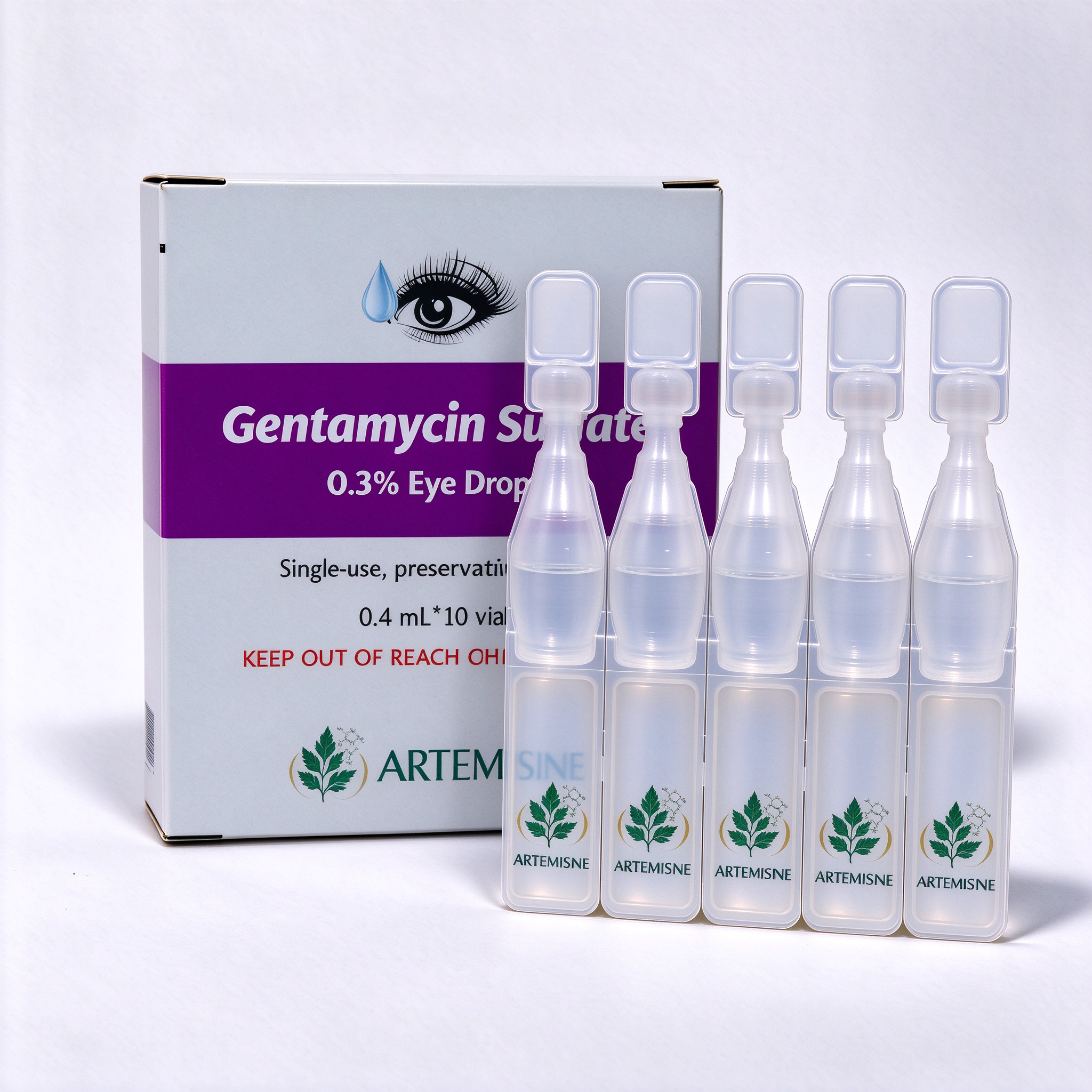
Gentamicin Sulfate Eye Drops 0.3% (3 mg/mL) 0.4 mL

● Gentamicin sulfate 0.3% (3 mg/mL) is a sterile, aqueous ophthalmic solution; gentamicin is an aminoglycoside antibiotic from Micromonospor

Gentamicin Sulfate Eye Drops 0.3% (3 mg/mL) 0.4 mL product packaging
Ophthalmic

Gentamicin Sulfate Eye Drops 0.3% (3 mg/mL) 0.4 mL

● Gentamicin sulfate 0.3% (3 mg/mL) is a sterile, aqueous ophthalmic solution; gentamicin is an aminoglycoside antibiotic from Micromonospora purpurea cultures [1][2]
● It is bactericidal, acting mainly by inhibiting bacterial protein synthesis at the level of the 30S ribosomal subunit, and also affects plasma membrane integrity and RNA metabolism of susceptible bacteria [2]
● One mL contains gentamicin sulfate equivalent to 3 mg of gentamicin base; a 0.4 mL single-dose unit contains about 1.2 mg [1][2][3]
● US reference: buffered to approximately pH 7.0 (6.5–7.5), benzalkonium chloride 0.01% preservative, sodium chloride, dibasic and monobasic sodium phosphate, purified water [1]
● UK reference: sterile, isotonic solution containing gentamicin sulfate equivalent to 30 mg gentamicin base per 10 mL (3 mg/mL), with benzalkonium chloride, borax, sodium chloride and water for injection [2]
● Gentamicin has greater antibacterial activity than streptomycin, neomycin or kanamycin [2]

Product NameGentamicin Sulfate Eye Drops 0.3% (3 mg/mL) 0.4 mL
Dosage FormOphthalmic
Strength0.3% (3 mg/mL) 0.4 mL
StandardsBP / ENTERPRISE
PackingCustomized per market requirement (bottle / blister / box)
DocumentsCOA, COPP, DMF, CTD Dossiers
MOQContact us for MOQ and current stock
Request Quotation › ← Back to Ophthalmic
WHO Prescribing Guidance

Indications · Administration · Dosage · Precautions

Reference information summarised from WHO prescribing guidance. Expand each item below — clinical use must always follow the locally approved product insert.

🎯Indications▾
● US reference: topical treatment of ocular bacterial infections caused by susceptible strains, including conjunctivitis, keratitis, keratoconjunctivitis, corneal ulcers, blepharitis, blepharoconjunctivitis, acute meibomianitis and dacryocystitis (e.g. Staphylococcus aureus, S. epidermidis, Streptococcus pyogenes, S. pneumoniae, Enterobacter aerogenes, Escherichia coli, Haemophilus influenzae, Klebsiella pneumoniae, Neisseria gonorrhoeae, Pseudomonas aeruginosa, Serratia marcescens) [1] ● UK reference: treatment of superficial eye infections caused by gentamicin-sensitive organisms in adults and children, and prophylaxis against infection in trauma of the eye [2]
💧Administration▾
● For ophthalmic use only; instil one or two drops into the affected eye(s) [1][2][3] ● Not for injection: never inject subconjunctivally and never introduce the solution directly into the anterior chamber of the eye [1] ● Wash hands before use; do not allow the dropper tip to touch the eye, eyelid or any other surface [1][3] ● After instillation, close the eye for 2–3 minutes and press gently on the tear duct; wait at least 5 minutes between drops in the same eye [3] ● Contact lenses: remove before using the drops and wait at least 15 minutes before reinsertion (UK, as benzalkonium chloride can discolour soft lenses) [2]; do not wear contact lenses while there is an eye infection [3] ● Storage: UK reference — store below 25 °C, do not freeze, shelf life 3 years, discard 4 weeks after first opening [2]; US reference — 2–25 °C, avoid excessive heat [1]
⚖️Dosage▾
The schedules below refer to registered gentamicin 0.3% ophthalmic products; for the single-dose presentation, follow the approved label of the product concerned [1][2].
⚠️Precautions & Warnings▾
● Contraindicated in patients with known hypersensitivity to any component (US) [1]; the UK reference also contraindicates myasthenia gravis and known or suspected perforation of the ear drum (for ear use) [2] ● Not for injection into the eye; never inject subconjunctivally or directly into the anterior chamber [1] ● Prolonged use of topical antibiotics may result in overgrowth of non-susceptible organisms, including fungi, and bacterial resistance to gentamicin may develop; long-term continuous topical therapy should be avoided, and treatment should be discontinued if irritation, sensitisation or super-infection occurs [1][2] ● Cross-sensitivity with other aminoglycoside antibiotics may occur [2] ● Gentamicin may cause irreversible partial or total deafness when given systemically or when applied topically to open wounds or damaged skin; the effect is dose-related, enhanced by renal and/or hepatic impairment and more likely in the elderly; caution is advised when topical gentamicin is used together with systemic aminoglycosides [2] ● Interactions: potent diuretics (ethacrynic acid, furosemide) may enhance ototoxicity; amphotericin B, cisplatin, cyclosporine and cephalosporins may enhance nephrotoxicity; neuromuscular blockade has been reported with curare-type muscle relaxants during anaesthesia [2] ● Pregnancy: use only if the potential benefit justifies the potential risk to the fetus (US) [1]; use only when considered essential by the physician after careful assessment (UK) [2]. Breast-feeding: use only when considered essential (UK) [2] ● Transient blurring of vision may occur after instillation; do not drive or operate machinery until vision has cleared [2][3] ● Benzalkonium chloride may cause eye irritation, symptoms of dry eyes and may affect the tear film and corneal surface; use with caution in dry-eye patients and in patients with a compromised cornea [2] ● Adverse reactions: the most frequently reported are ocular burning and irritation upon instillation, non-specific conjunctivitis, conjunctival epithelial defects and conjunctival hyperaemia; rare reactions include allergic reactions, thrombocytopenic purpura and hallucinations, and bacterial and fungal corneal ulcers have developed during treatment (US) [1]; the UK SmPC lists vision blurred, eye irritation, burning, stinging and itching as eye reactions of unknown frequency, and, for systemic gentamicin, ototoxicity, vestibular disorders, hearing loss, toxic nephropathy and acute renal failure (not expected from topical use) [2]; MedlinePlus reports eye irritation, burning or stinging and swelling of the eye [3] ● Storage: US reference — 2–25 °C, avoid excessive heat [1]; UK reference — below 25 °C, do not freeze, discard 4 weeks after opening [2]; MedlinePlus — original container, tightly closed, room temperature, out of the reach of children [3] For full prescribing information, refer to the approved product label / Summary of Product Characteristics of the product concerned [1][2][3].

Reference: WHO Model Formulary / WHO Model List of Essential Medicines. For professional reference only — clinical use must follow the locally approved product insert and national treatment guidelines.

Why Order From Us

Factory Direct. Fully Documented.

🛡️

GMP Quality

Full batch testing and quality traceability under standard GMP workshops.

🚢

Fast Delivery

Sufficient stock on regular items, familiar with export logistics to 50+ countries.

📑

Registration Support

COA, DMF, dossier and legalization documents for your market registration.

FAQ

Gentamicin Sulfate Eye Drops 0.3% (3 mg/mL) 0.4 mL — Frequently Asked Questions

Which documents are provided for Gentamicin Sulfate Eye Drops 0.3% (3 mg/mL) 0.4 mL registration?

Every batch of Gentamicin Sulfate Eye Drops 0.3% (3 mg/mL) 0.4 mL ships with a Certificate of Analysis (COA). For market registration we provide COPP, DMF and CTD-format dossiers, plus legalisation support where your authority requires it.

What is the MOQ and lead time for Gentamicin Sulfate Eye Drops 0.3% (3 mg/mL) 0.4 mL?

MOQ and lead time for Gentamicin Sulfate Eye Drops 0.3% (3 mg/mL) 0.4 mL depend on strength, packaging and destination market. Send us your target market and annual volume — our export team confirms current stock, MOQ and lead time within 24 hours.

Do you support OEM / private label?

Yes. We offer OEM packaging and private-label production for Gentamicin Sulfate Eye Drops 0.3% (3 mg/mL) 0.4 mL, subject to the regulatory requirements of the destination market.

Which markets have you exported ophthalmic products to?

We have supplied ophthalmic products to 50+ countries across Africa, Southeast Asia, Latin America and the Middle East, with experience in ministry-of-health registration and international tenders.

How is the quality of Gentamicin Sulfate Eye Drops 0.3% (3 mg/mL) 0.4 mL controlled?

Gentamicin Sulfate Eye Drops 0.3% (3 mg/mL) 0.4 mL is produced in China-GMP workshops (site re-inspected and passed in 2026), released only after full QC testing against BP / enterprise standards, with retained samples kept for one year beyond the product's expiry date.

Ask About This Product ›
✎ 💬 ↑
👋 Hi! I'm Care, your product guide. Tap me to ask about our medicines & APIs. ×
Care - product guide assistant