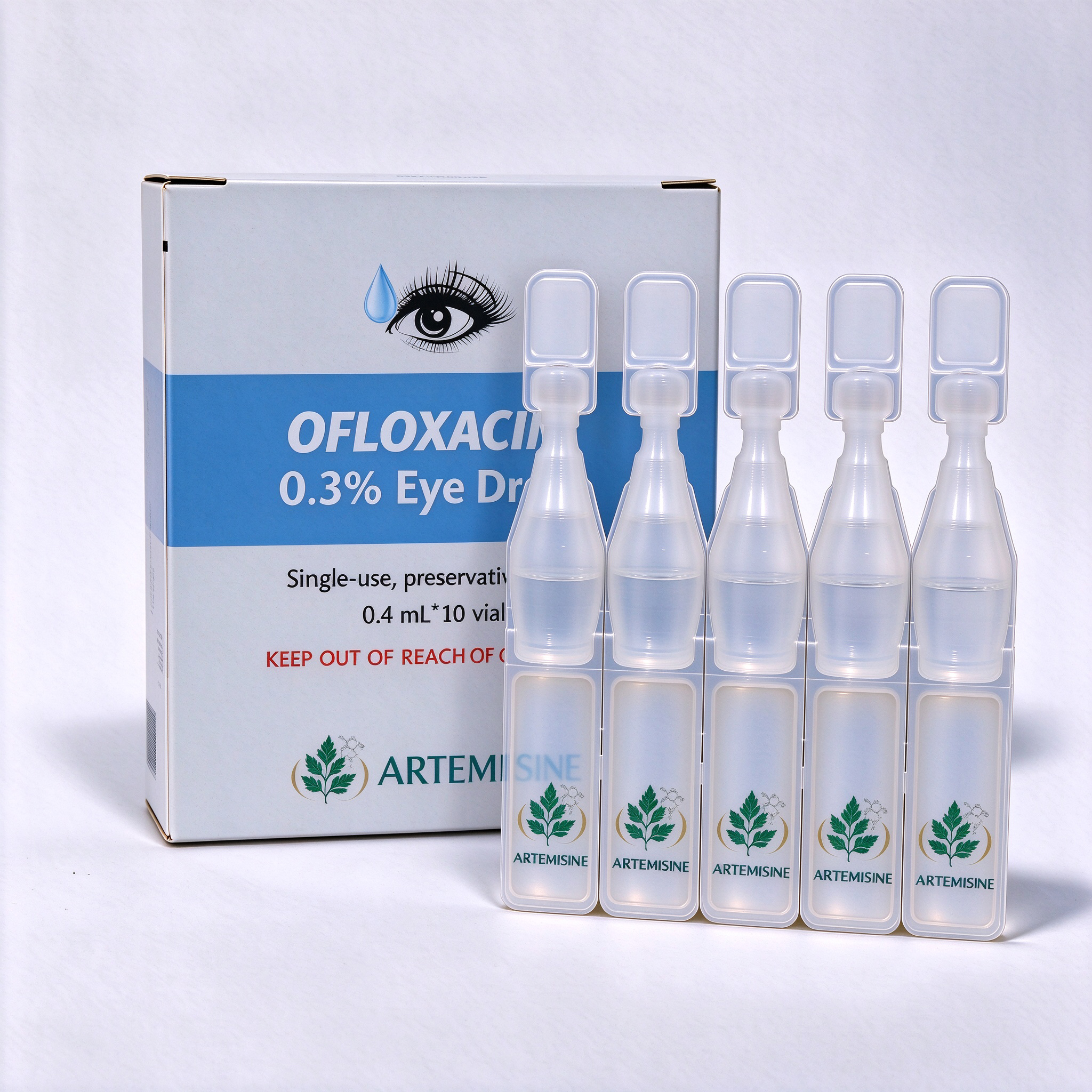
Ofloxacin Eye Drops 0.3% (3 mg/mL) 0.4 mL

● Ofloxacin 0.3% (3 mg/mL) is a sterile ophthalmic solution; a fluorinated carboxyquinolone (fluoroquinolone) anti-infective for topical oph

Ofloxacin Eye Drops 0.3% (3 mg/mL) 0.4 mL product packaging
Ophthalmic

Ofloxacin Eye Drops 0.3% (3 mg/mL) 0.4 mL

● Ofloxacin 0.3% (3 mg/mL) is a sterile ophthalmic solution; a fluorinated carboxyquinolone (fluoroquinolone) anti-infective for topical ophthalmic use [1][2]
● It is bactericidal, inhibiting bacterial DNA gyrase, the enzyme essential for bacterial DNA duplication, transcription and repair [1][2]
● One mL contains 3.0 mg of ofloxacin (0.3% w/v); a 0.4 mL single-dose unit contains about 1.2 mg [1][2][3]
● US reference: benzalkonium chloride 0.005% preservative, sodium chloride and water for injection, hydrochloric acid/sodium hydroxide for pH; pH 6.4, osmolality about 300 mOsm/kg [1]
● Clear, pale to light yellow-green solution, practically free of visible particles [2]
● Cross-resistance has been observed between ofloxacin and other fluoroquinolones; there is generally no cross-resistance with beta-lactams or aminoglycosides [1]
● Tear-film concentrations are well maintained and serum exposure is about 1000 times lower than after standard oral doses [1][2]

Product NameOfloxacin Eye Drops 0.3% (3 mg/mL) 0.4 mL
Dosage FormOphthalmic
Strength0.3% (3 mg/mL) 0.4 mL
StandardsBP / ENTERPRISE
PackingCustomized per market requirement (bottle / blister / box)
DocumentsCOA, COPP, DMF, CTD Dossiers
MOQContact us for MOQ and current stock
Request Quotation › ← Back to Ophthalmic
WHO Prescribing Guidance

Indications · Administration · Dosage · Precautions

Reference information summarised from WHO prescribing guidance. Expand each item below — clinical use must always follow the locally approved product insert.

🎯Indications▾
● US reference: bacterial conjunctivitis and bacterial corneal ulcers caused by susceptible strains such as S. aureus, S. epidermidis, Streptococcus pneumoniae, Enterobacter cloacae, Haemophilus influenzae, Proteus mirabilis and Pseudomonas aeruginosa, plus Serratia marcescens and Propionibacterium acnes for corneal ulcers [1] ● UK reference: topical treatment of external ocular infections, such as conjunctivitis and keratoconjunctivitis, in adults and children caused by ofloxacin-sensitive organisms [2] ● Safety and efficacy in the treatment of ophthalmia neonatorum have not been established [2]
💧Administration▾
● Topical ocular instillation only; instil into the affected eye(s) as prescribed [1][2][3] ● Not for injection: do not inject subconjunctivally or into the anterior chamber of the eye [1][2] ● Wash hands before use; do not allow the dropper tip to touch the eye, fingers or any other surface [1][3] ● After instillation, close the eye for 2–3 minutes and press gently on the tear duct [3] ● Wait at least 5 minutes between drops in the same eye [3]; give other topical ophthalmic medicines at least 10 minutes before or after (US reference) [1] ● Contact lenses: not recommended during treatment of an eye infection; remove before application and wait at least 15 minutes before reinsertion (UK, as benzalkonium chloride can discolour soft lenses) [2]; MedlinePlus: remove before instillation, reinsert after 10 minutes [3] ● Single-dose units: use one 0.4 mL unit per instillation and discard the remainder; the UK multi-dose bottle is discarded 28 days after first opening [2] ● Storage: US reference — store at 20–25 °C [1]; UK reference — do not store above 25 °C, shelf life 2 years unopened [2]
⚖️Dosage▾
The schedules below refer to registered ofloxacin 0.3% products; for the single-dose presentation, follow the approved label of the product concerned [1][2]
⚠️Precautions & Warnings▾
● Contraindicated in hypersensitivity to ofloxacin, any excipient, or other quinolones [1][2] ● Serious, occasionally fatal anaphylactic/anaphylactoid reactions have been reported with systemic quinolones, including ofloxacin, some after the first dose; discontinue at the first sign of rash or allergy and institute emergency treatment [1][2] ● Prolonged use may cause overgrowth of non-susceptible organisms, including fungi; if superinfection or no improvement occurs, discontinue use and institute alternative therapy [1][2] ● Photosensitivity: sun or UV exposure should be avoided during use [2] ● Corneal perforation has been reported with topical fluoroquinolones in patients with pre-existing corneal epithelial defects or ulcers; caution is needed [2] ● Caution in patients with QT-prolongation risk factors (congenital long QT syndrome, QT-prolonging drugs, electrolyte imbalance, cardiac disease); elderly patients and women may be more sensitive to QTc-prolonging medications [2] ● Paediatrics: safety in infants below 1 year of age has not been established (US) [1]; not recommended for ophthalmia neonatorum caused by Neisseria gonorrhoeae or Chlamydia trachomatis (UK) [2] ● Pregnancy: use only if benefit justifies risk (US) [1]; not recommended in pregnant women (UK) [2]. Breast-feeding: decide whether to discontinue nursing or the drug [1][2] ● Transient blurred vision may occur after instillation; do not drive or operate machinery unless vision is clear [2] ● Drug interactions: no studies with the ophthalmic solution; systemic quinolones may raise theophylline, affect caffeine metabolism, enhance warfarin and cause creatinine elevations with cyclosporine; caution with QT-prolonging drugs [1][2][3] ● Adverse reactions: most frequently transient ocular burning or discomfort, plus stinging, redness, itching, chemical conjunctivitis/keratitis, oedema, foreign body sensation, photophobia, blurred vision, tearing, dryness and eye pain, with rare dizziness and nausea (US) [1]; the UK SmPC lists eye irritation and ocular discomfort as common and keratitis, conjunctivitis, blurred vision, photophobia, eye oedema, increased lacrimation, dry eye, eye pain, ocular hyperaemia and periorbital oedema of unknown frequency, with reports of dizziness, nausea, QT prolongation or ventricular arrhythmia and Stevens–Johnson syndrome/toxic epidermal necrolysis [2] ● Storage: US — 20–25 °C [1]; UK — not above 25 °C, discard 28 days after opening [2]; MedlinePlus — original container, tightly closed, room temperature, out of children’s reach [3] For full prescribing information, refer to the approved product label / Summary of Product Characteristics of the product concerned [1][2][3].

Reference: WHO Model Formulary / WHO Model List of Essential Medicines. For professional reference only — clinical use must follow the locally approved product insert and national treatment guidelines.

Why Order From Us

Factory Direct. Fully Documented.

🛡️

GMP Quality

Full batch testing and quality traceability under standard GMP workshops.

🚢

Fast Delivery

Sufficient stock on regular items, familiar with export logistics to 50+ countries.

📑

Registration Support

COA, DMF, dossier and legalization documents for your market registration.

FAQ

Ofloxacin Eye Drops 0.3% (3 mg/mL) 0.4 mL — Frequently Asked Questions

Which documents are provided for Ofloxacin Eye Drops 0.3% (3 mg/mL) 0.4 mL registration?

Every batch of Ofloxacin Eye Drops 0.3% (3 mg/mL) 0.4 mL ships with a Certificate of Analysis (COA). For market registration we provide COPP, DMF and CTD-format dossiers, plus legalisation support where your authority requires it.

What is the MOQ and lead time for Ofloxacin Eye Drops 0.3% (3 mg/mL) 0.4 mL?

MOQ and lead time for Ofloxacin Eye Drops 0.3% (3 mg/mL) 0.4 mL depend on strength, packaging and destination market. Send us your target market and annual volume — our export team confirms current stock, MOQ and lead time within 24 hours.

Do you support OEM / private label?

Yes. We offer OEM packaging and private-label production for Ofloxacin Eye Drops 0.3% (3 mg/mL) 0.4 mL, subject to the regulatory requirements of the destination market.

Which markets have you exported ophthalmic products to?

We have supplied ophthalmic products to 50+ countries across Africa, Southeast Asia, Latin America and the Middle East, with experience in ministry-of-health registration and international tenders.

How is the quality of Ofloxacin Eye Drops 0.3% (3 mg/mL) 0.4 mL controlled?

Ofloxacin Eye Drops 0.3% (3 mg/mL) 0.4 mL is produced in China-GMP workshops (site re-inspected and passed in 2026), released only after full QC testing against BP / enterprise standards, with retained samples kept for one year beyond the product's expiry date.

Ask About This Product ›
✎ 💬 ↑
👋 Hi! I'm Care, your product guide. Tap me to ask about our medicines & APIs. ×
Care - product guide assistant