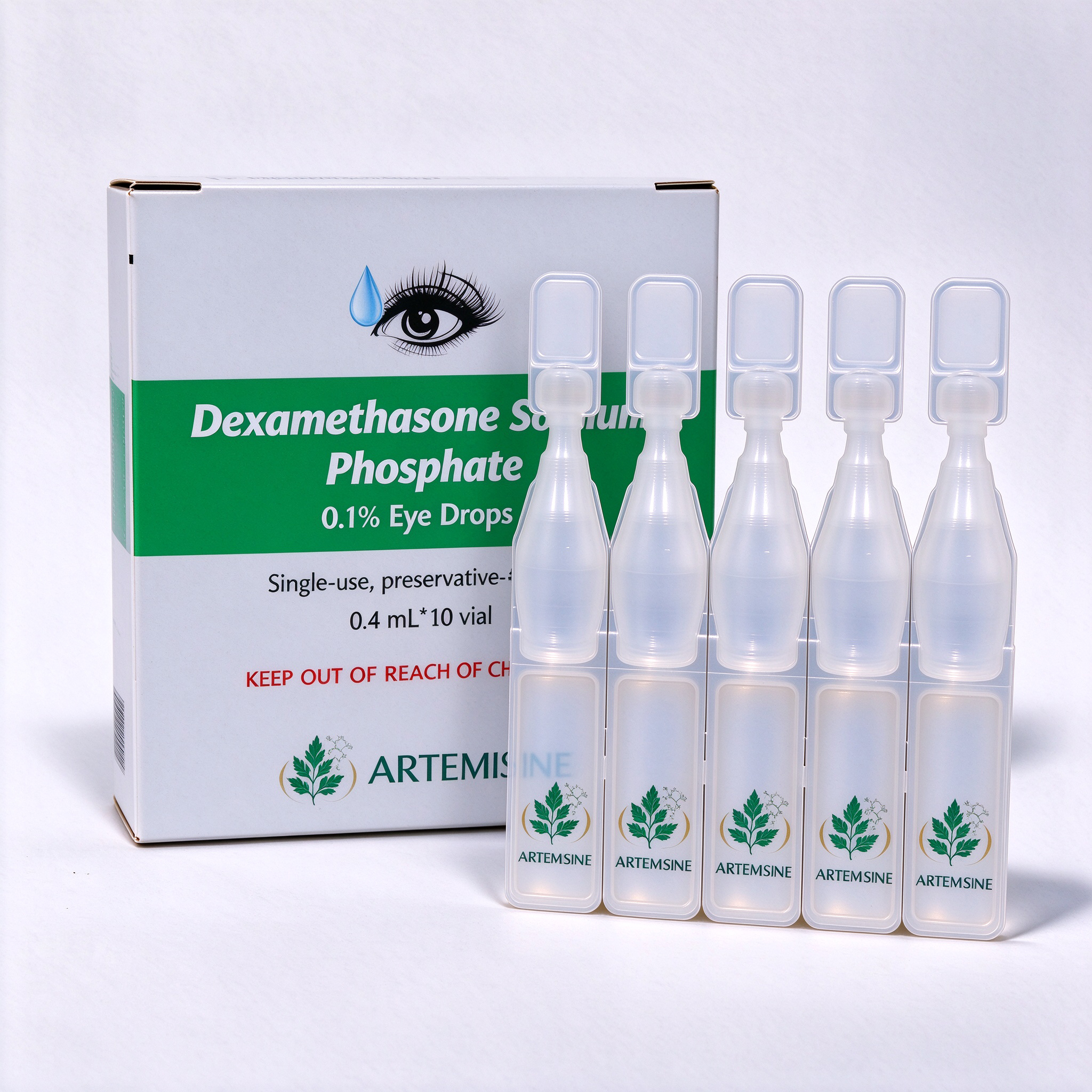
Dexamethasone Sodium Phosphate Eye Drops 1% (10 mg/mL) 0.4 mL

● Dexamethasone sodium phosphate is the water-soluble inorganic ester of dexamethasone, a synthetic corticosteroid with anti-inflammatory an

Dexamethasone Sodium Phosphate Eye Drops 1% (10 mg/mL) 0.4 mL product packaging
Ophthalmic

Dexamethasone Sodium Phosphate Eye Drops 1% (10 mg/mL) 0.4 mL

● Dexamethasone sodium phosphate is the water-soluble inorganic ester of dexamethasone, a synthetic corticosteroid with anti-inflammatory and anti-allergic action [1]
● Potent anti-inflammatory activity: approximately 25 times that of hydrocortisone and 5 times that of prednisolone [1]
● Due to its hydrophilic properties, dexamethasone sodium phosphate is barely absorbed by the intact corneal epithelium; intraocular penetration occurs in significant amounts [1][2]
● Clear, colourless, preservative-free ophthalmic solution (reference product pH 7.1–8.1) [1]
● Sterile ophthalmic solution, dexamethasone sodium phosphate 1% (10 mg/mL), in 0.4 mL single-dose units [1][2]

Product NameDexamethasone Sodium Phosphate Eye Drops 1% (10 mg/mL) 0.4 mL
Dosage FormOphthalmic
Strength1% (10 mg/mL) 0.4 mL
StandardsBP / ENTERPRISE
PackingCustomized per market requirement (bottle / blister / box)
DocumentsCOA, COPP, DMF, CTD Dossiers
MOQContact us for MOQ and current stock
Request Quotation › ← Back to Ophthalmic
WHO Prescribing Guidance

Indications · Administration · Dosage · Precautions

Reference information summarised from WHO prescribing guidance. Expand each item below — clinical use must always follow the locally approved product insert.

🎯Indications▾
● Treatment of non-infectious inflammatory conditions affecting the anterior segment of the eye [1] ● Steroid-responsive inflammatory conditions of the conjunctiva, cornea and anterior segment, such as anterior uveitis, iritis, cyclitis, allergic and vernal conjunctivitis, herpes zoster keratitis and superficial punctate keratitis [2] ● Corneal injury from chemical, radiation or thermal burns or following penetration by foreign bodies [2] ● Post-operative use to reduce inflammatory reactions and suppress graft reaction [2]
💧Administration▾
● For ocular use only [1][2] ● Wash hands before use and avoid allowing the tip of the container to come into contact with the eye or surrounding structures; improperly handled ocular solutions can become contaminated and cause serious eye damage [1] ● Nasolacrimal occlusion (compressing the lacrimal ducts) or gently closing the eyelid after administration may reduce systemic absorption [1][2] ● When used together with other eye drops, space the instillations by 15 minutes [1] ● Wearing of contact lenses during treatment with corticosteroid eye drops should be avoided [1][2]
⚖️Dosage▾
The schedule below refers to registered ophthalmic dexamethasone products; for the eye-drops presentation, instil the volume and frequency prescribed in the approved label of the product concerned [1][2]. ● This medicinal product should be used only under close ophthalmic supervision [1] ● In case of a favourable response, reduce the dosing frequency gradually and taper off to avoid a relapse [1][2]
⚠️Precautions & Warnings▾
● Contraindicated in eye infections not controlled by anti-infectious treatment: acute purulent bacterial infections (including Pseudomonas and mycobacterial infections), fungal infections, epithelial herpes simplex keratitis (dendritic keratitis), vaccinia, varicella zoster and most other viral infections of the cornea and conjunctiva, and amoebic keratitis [1] ● Also contraindicated in perforation, ulceration and injury of the cornea with uncompleted epithelialisation, in known glucocorticosteroid-induced ocular hypertension, and in hypersensitivity to dexamethasone or any excipient [1][2] ● Topical steroids should never be given for an undiagnosed red eye [1] ● Prolonged use may result in ocular hypertension/glaucoma (with optic-nerve damage, reduced visual acuity and visual-field defects) and posterior subcapsular cataract formation; intraocular pressure and the lens should be checked routinely and frequently, especially in children and elderly patients; steroid-induced IOP rise generally occurs within 2 weeks of treatment [1][2] ● Corticosteroids may reduce resistance to, and mask the signs of, opportunistic infections (bacterial, viral or fungal); antibiotic therapy is mandatory in case of co-infection, and fungal infection should be suspected in persistent corneal ulceration [1][2] ● Thinning of the cornea and sclera increases the risk of perforation; cases of corneal calcification have been reported very rarely with phosphate-containing eye drops [1][2] ● Cushing’s syndrome and/or adrenal suppression may occur after intensive or long-term continuous therapy in predisposed patients, including children and patients treated with CYP3A4 inhibitors (e.g. ritonavir, cobicistat) [1][2] ● Pregnancy: use is preferable to avoid during pregnancy as a precautionary measure (insufficient human data; corticosteroids cross the placenta); breastfeeding: the total dose is low and use can be considered [1][2] ● Temporary blurred vision may affect driving or using machines — wait until vision is clear [1][2] ● Storage (reference products): shelf life 30 months, use within 28 days after first opening (Eythalm); Maxidex: store below 25 °C, do not refrigerate or freeze, discard 1 month after opening — follow the approved label of the product concerned [1][2] ● Keep out of the reach of children [1] For full prescribing information, refer to the approved product label / Summary of Product Characteristics of the product concerned [1][2][3].

Reference: WHO Model Formulary / WHO Model List of Essential Medicines. For professional reference only — clinical use must follow the locally approved product insert and national treatment guidelines.

Why Order From Us

Factory Direct. Fully Documented.

🛡️

GMP Quality

Full batch testing and quality traceability under standard GMP workshops.

🚢

Fast Delivery

Sufficient stock on regular items, familiar with export logistics to 50+ countries.

📑

Registration Support

COA, DMF, dossier and legalization documents for your market registration.

FAQ

Dexamethasone Sodium Phosphate Eye Drops 1% (10 mg/mL) 0.4 mL — Frequently Asked Questions

Which documents are provided for Dexamethasone Sodium Phosphate Eye Drops 1% (10 mg/mL) 0.4 mL registration?

Every batch of Dexamethasone Sodium Phosphate Eye Drops 1% (10 mg/mL) 0.4 mL ships with a Certificate of Analysis (COA). For market registration we provide COPP, DMF and CTD-format dossiers, plus legalisation support where your authority requires it.

What is the MOQ and lead time for Dexamethasone Sodium Phosphate Eye Drops 1% (10 mg/mL) 0.4 mL?

MOQ and lead time for Dexamethasone Sodium Phosphate Eye Drops 1% (10 mg/mL) 0.4 mL depend on strength, packaging and destination market. Send us your target market and annual volume — our export team confirms current stock, MOQ and lead time within 24 hours.

Do you support OEM / private label?

Yes. We offer OEM packaging and private-label production for Dexamethasone Sodium Phosphate Eye Drops 1% (10 mg/mL) 0.4 mL, subject to the regulatory requirements of the destination market.

Which markets have you exported ophthalmic products to?

We have supplied ophthalmic products to 50+ countries across Africa, Southeast Asia, Latin America and the Middle East, with experience in ministry-of-health registration and international tenders.

How is the quality of Dexamethasone Sodium Phosphate Eye Drops 1% (10 mg/mL) 0.4 mL controlled?

Dexamethasone Sodium Phosphate Eye Drops 1% (10 mg/mL) 0.4 mL is produced in China-GMP workshops (site re-inspected and passed in 2026), released only after full QC testing against BP / enterprise standards, with retained samples kept for one year beyond the product's expiry date.

Ask About This Product ›
✎ 💬 ↑
👋 Hi! I'm Care, your product guide. Tap me to ask about our medicines & APIs. ×
Care - product guide assistant