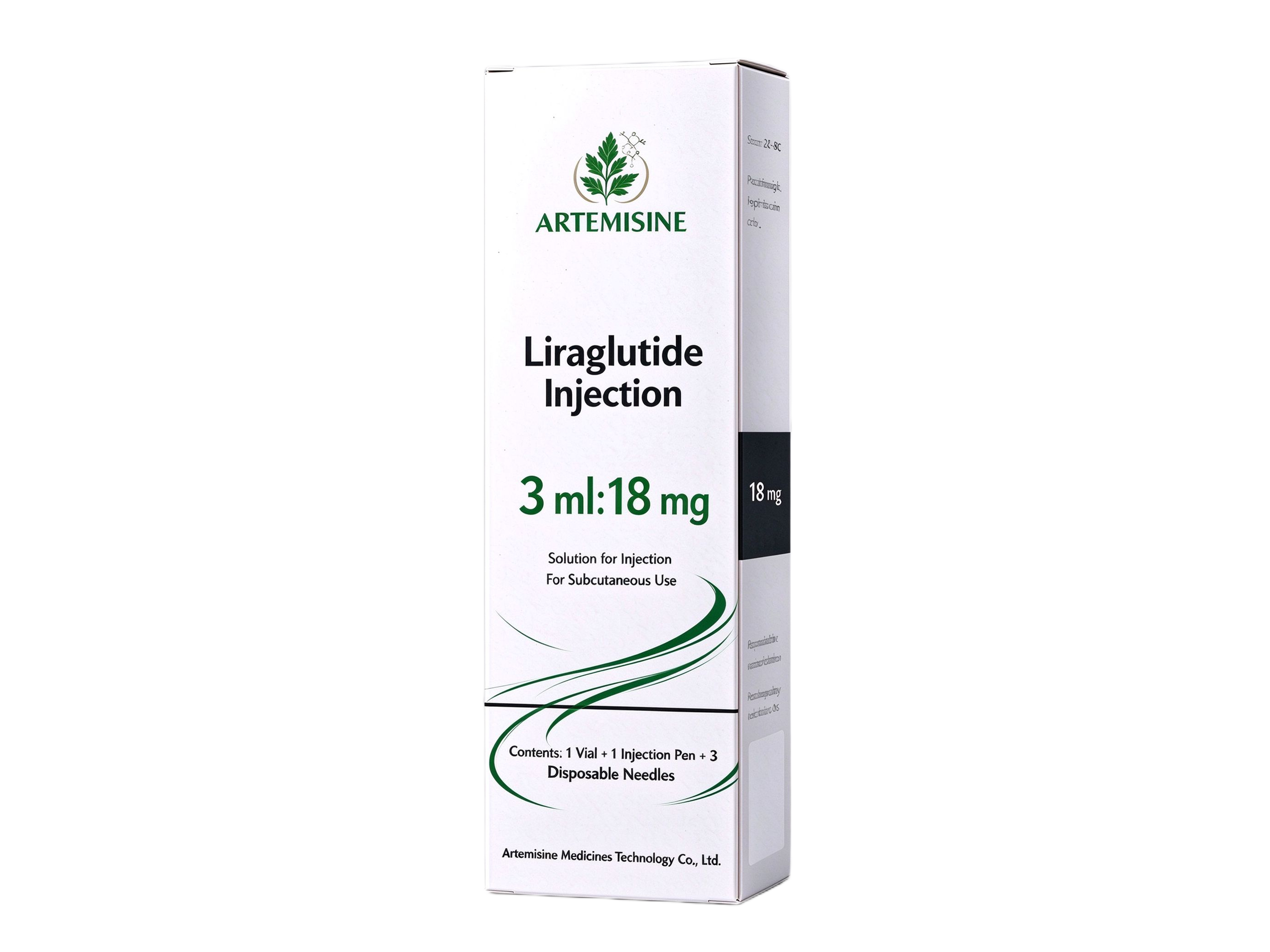
🎯Indications▾
● Adjunct to a reduced-calorie diet and increased physical activity for weight management in adults with an initial BMI of ≥ 30 kg/m² (obesity) [1][2]
● Adults with overweight (BMI ≥ 27 to < 30 kg/m²) in the presence of at least one weight-related comorbidity, such as dysglycaemia (prediabetes or type 2 diabetes mellitus), hypertension, dyslipidaemia or obstructive sleep apnoea [1][2]
● Adolescents aged 12 years and above with obesity (BMI corresponding to ≥ 30 kg/m² for adults by international cut-off points) and body weight above 60 kg [1][2]
● Discontinue in adults who have not lost at least 5% of initial body weight after 12 weeks on the 3.0 mg/day dose [2]
● Discontinue and re-evaluate in adolescents who have not lost at least 4% of BMI or BMI z-score after 12 weeks on the 3.0 mg/day or maximum tolerated dose [2]
● Coadministration with other liraglutide-containing products or with any other GLP-1 receptor agonist is not recommended [1][2]
💧Administration▾
● For subcutaneous use only — must not be administered intravenously or intramuscularly [2]
● Inject once daily at any time of day, without regard to the timing of meals [1][2]
● Inject in the abdomen, thigh or upper arm; injection site and timing may be changed without dose adjustment, but it is preferable to inject around the same time of day [2]
● Rotate injection sites within the same region to reduce the risk of injection-site reactions and cutaneous amyloidosis [1][2]
● Use a new needle for each injection, discard the needle after each injection, and keep the pen cap on when not in use [2]
● Inspect the solution before each injection: use only if it is clear, colourless or almost colourless and free of particles; do not use if it has been frozen [1][2]
● Missed dose: if a dose is missed within 12 hours of the usual time, take it as soon as possible; if less than 12 hours remain until the next dose, skip the missed dose and resume with the next scheduled dose — do not take an extra dose or increase the dose [1][2]
⚖️Dosage▾
The starting dose is 0.6 mg once daily. Increase the dose to 3.0 mg once daily in increments of 0.6 mg with at least one-week intervals to improve gastrointestinal tolerability (Table 1). Daily doses higher than 3.0 mg are not recommended [1][2].
● In adults, the recommended maintenance dose is 3.0 mg once daily; lower doses are for titration only. Discontinue if the 3.0 mg dose is not tolerated [1]
● Evaluate weight change 16 weeks after starting treatment in adults and discontinue if the patient has not lost at least 4% of baseline body weight [1]
● Adolescents: similar escalation schedule; maintenance is 3.0 mg once daily, and may be reduced to 2.4 mg once daily if 3.0 mg is not tolerated; escalation may take up to 8 weeks [1]
● In adult patients with type 2 diabetes, monitor blood glucose before starting and during treatment; consider reducing the dose of concomitant insulin or sulfonylureas to lower the risk of hypoglycaemia [1][2]
⚠️Precautions & Warnings▾
● Boxed warning — risk of thyroid C-cell tumours: contraindicated in patients with a personal or family history of medullary thyroid carcinoma (MTC) or Multiple Endocrine Neoplasia syndrome type 2 (MEN 2) [1]
● Contraindicated in patients with serious hypersensitivity to liraglutide or to any excipient; anaphylactic reactions and angioedema have been reported [1][2]
● Acute pancreatitis: persistent severe abdominal pain may occur; discontinue liraglutide if pancreatitis is suspected and do not restart if the diagnosis is confirmed [1][2]
● Gallbladder disease: a higher rate of cholelithiasis and cholecystitis was observed than with placebo; inform patients of the characteristic symptoms [1][2]
● Hypoglycaemia: risk increased when used with an insulin secretagogue (e.g. sulfonylurea) or insulin in type 2 diabetes; reduce the dose of the concomitant agent and educate patients on the signs and symptoms [1][2]
● Heart rate increase: monitor heart rate at regular intervals; discontinue if a clinically relevant sustained increase in resting heart rate occurs [1][2]
● Acute kidney injury due to volume depletion has been reported, mostly after nausea, vomiting or diarrhoea; monitor renal function and advise patients to avoid dehydration [1][2]
● Severe gastrointestinal adverse reactions may occur; use is not recommended in patients with severe gastroparesis [1]
● Monitor for depression, suicidal thoughts or behaviour; discontinue if symptoms develop [1]
● Pulmonary aspiration during general anaesthesia or deep sedation has been reported with GLP-1 receptor agonists; tell patients to inform healthcare providers of planned surgeries or procedures [1]
● Pregnancy: may cause fetal harm — discontinue liraglutide when pregnancy is recognised; not recommended during breast-feeding [1][2]
● Most common adverse reactions (≥ 5%): nausea (39.3%), diarrhoea (20.9%), constipation (19.4%), vomiting (15.7%), injection-site reactions (13.9%), headache (13.6%), dyspepsia (9.6%), fatigue (7.5%), dizziness (6.9%) and abdominal pain (5.4%) in adult clinical trials [1]
● Storage: refrigerate at 2–8 °C before first use; do not freeze. After first use, store below 30 °C or refrigerate for up to 1 month; keep the pen cap on to protect from light [2]
● Discard the injection needle after each injection and store the pen without a needle attached to prevent contamination and leakage [2]
For full prescribing information, refer to the approved product label / Summary of Product Characteristics of the product concerned [1][2].
Reference: WHO Model Formulary / WHO Model List of Essential Medicines. For professional reference only — clinical use must follow the locally approved product insert and national treatment guidelines.


 Artemisine Medicines