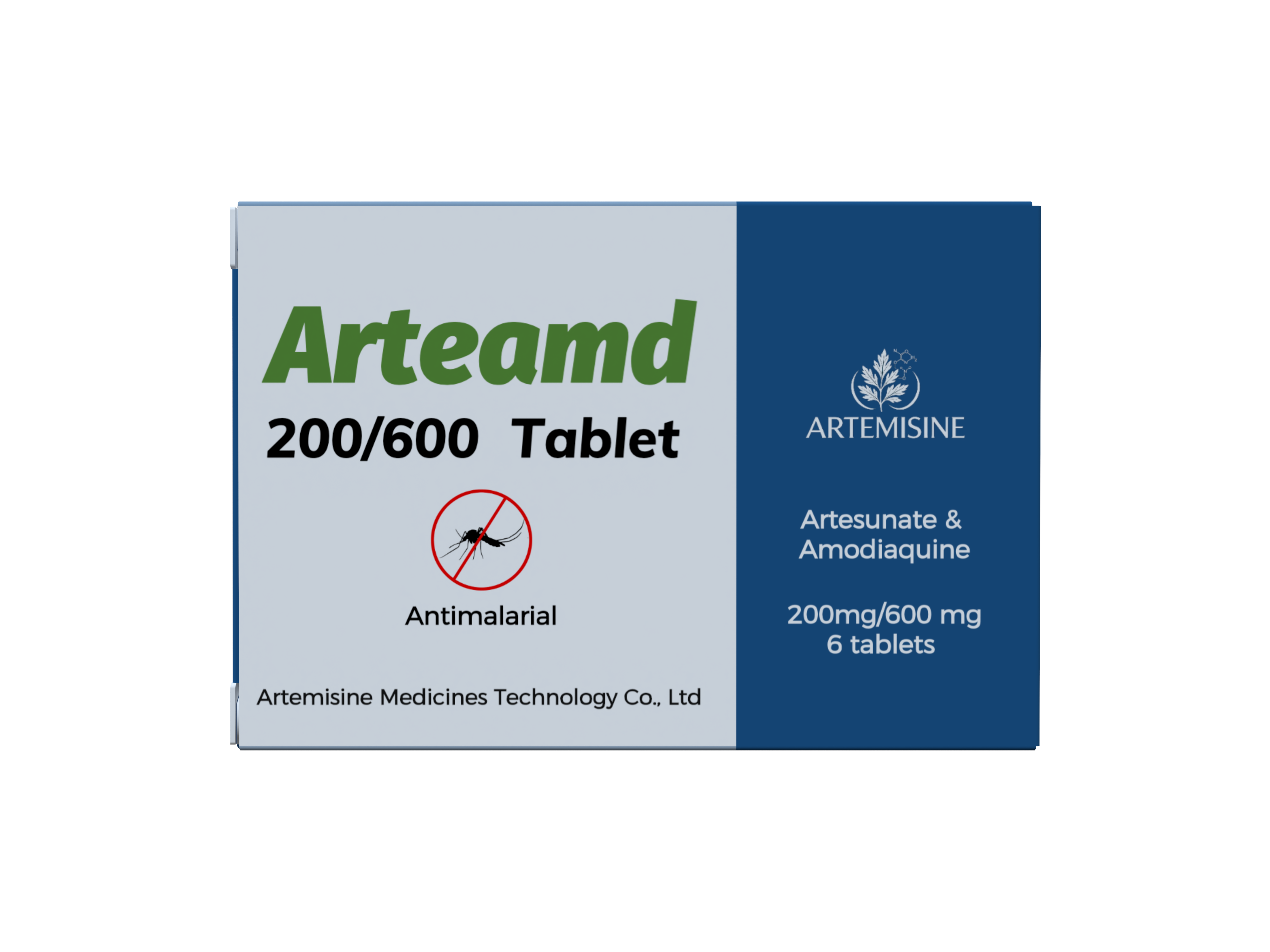
Artesunate Amodiaquine Tablets

● Each film-coated tablet contains artesunate 200 mg and amodiaquine 600 mg (as amodiaquine hydrochloride) [2] ● A fixed-dose ACT combining

Artesunate Amodiaquine Tablets product packaging
Tablets

Artesunate Amodiaquine Tablets

● Each film-coated tablet contains artesunate 200 mg and amodiaquine 600 mg (as amodiaquine hydrochloride) [2]
● A fixed-dose ACT combining two blood schizonticides with independent modes of action and different parasite targets (ATC P01BF03) [1]
● Rapid-acting artesunate (artemisinin derivative) plus the longer-acting amodiaquine (4-aminoquinoline) — high efficacy, reduced risk of resistance, 3-day oral course [1][2]

Product NameArtesunate Amodiaquine Tablets
Dosage FormTablets
Strength200 mg / 600 mg
StandardsBP / ENTERPRISE
PackingCustomized per market requirement (bottle / blister / box)
DocumentsCOA, COPP, DMF, CTD Dossiers
MOQContact us for MOQ and current stock
Request Quotation › ← Back to Tablets
WHO Prescribing Guidance

Indications · Administration · Dosage · Precautions

Reference information summarised from WHO prescribing guidance. Expand each item below — clinical use must always follow the locally approved product insert.

🎯Indications▾
● Treatment of uncomplicated malaria due to Plasmodium falciparum strains susceptible to both amodiaquine and artesunate [1] ● Therapy should follow the latest official malaria treatment guidelines and local information on drug resistance [1] ● Not for severe or complicated malaria, no
💧Administration▾
● Oral use: swallow the tablet whole with water; do not take with a meal containing a high amount of fat [1] ● If swallowing is difficult, the tablet may be crushed and mixed with water (per the approved prescribing information) [1] ● If the patient vomits within half an hour of dosing, give another dose; if vomiting continues, management for severe malaria should be considered [1] ● Take once daily for 3 consecutive days
⚖️Dosage▾
The regimen is based on the WHO-recommended target doses of artesunate 4 mg/kg/day (range 2–10) and amodiaquine 10 mg/kg/day (range 7.5–15), once daily for 3 days [1].
⚠️Precautions & Warnings▾
● Contraindicated in hypersensitivity to the active substances or excipients, in a history of liver injury or haematological events during treatment with amodiaquine, and in retinopathy (with frequent treatment). Not for malaria prophylaxis [1] ● Monitor for signs of hepatitis (jaundice) and agranulocytosis (fever, tonsillitis, mouth ulcers); if suspected, check liver function and/or blood counts immediately and discontinue treatment if required [1] ● QT interval caution: use with care in cardiac disease, history of ventricular arrhythmias, uncorrected hypokalaemia or hypomagnesaemia, bradycardia, or with medicines that prolong the QT interval [1] ● Avoid concomitant use with efavirenz (marked hepatotoxicity) and with CYP2A6 or CYP2C8 inhibitors; caution with beta-blockers, antidepressants and antipsychotics [1] ● Pregnancy: avoid in the first trimester unless clearly necessary; use with caution in later trimesters if no alternative. Breastfeeding is acceptable as amounts in milk are small [1] ● Common side effects: anorexia, abdominal pain, nausea, asthenia, somnolence, insomnia, cough; QT prolongation. May cause drowsiness or dizziness — do not drive or use machines if affected [1] ● Store below 30 °C (product label: below 25 °C, in a dry place, protected from light and moisture); keep out of the reach of children; dispose of unused medicine per local requirements [1][2] ● Prescription-only medicine [1] For full prescribing information, refer to t

Reference: WHO Model Formulary / WHO Model List of Essential Medicines. For professional reference only — clinical use must follow the locally approved product insert and national treatment guidelines.

Why Order From Us

Factory Direct. Fully Documented.

🛡️

GMP Quality

Full batch testing and quality traceability under standard GMP workshops.

🚢

Fast Delivery

Sufficient stock on regular items, familiar with export logistics to 50+ countries.

📑

Registration Support

COA, DMF, dossier and legalization documents for your market registration.

FAQ

Artesunate Amodiaquine Tablets — Frequently Asked Questions

Which documents are provided for Artesunate Amodiaquine Tablets registration?

Every batch of Artesunate Amodiaquine Tablets ships with a Certificate of Analysis (COA). For market registration we provide COPP, DMF and CTD-format dossiers, plus legalisation support where your authority requires it.

What is the MOQ and lead time for Artesunate Amodiaquine Tablets?

MOQ and lead time for Artesunate Amodiaquine Tablets depend on strength, packaging and destination market. Send us your target market and annual volume — our export team confirms current stock, MOQ and lead time within 24 hours.

Do you support OEM / private label?

Yes. We offer OEM packaging and private-label production for Artesunate Amodiaquine Tablets, subject to the regulatory requirements of the destination market.

Which markets have you exported tablets products to?

We have supplied tablets products to 50+ countries across Africa, Southeast Asia, Latin America and the Middle East, with experience in ministry-of-health registration and international tenders.

How is the quality of Artesunate Amodiaquine Tablets controlled?

Artesunate Amodiaquine Tablets is produced in China-GMP workshops (site re-inspected and passed in 2026), released only after full QC testing against BP / enterprise standards, with retained samples kept for one year beyond the product's expiry date.

Ask About This Product ›
✎ 💬 ↑
👋 Hi! I'm Care, your product guide. Tap me to ask about our medicines & APIs. ×
Care - product guide assistant